
Where to Buy a Digital Piano in Malaysia (2026)
A practical guide for parents and beginners — by Music Bliss, GOLD Authorised Yamaha Dealer & Authorised Kawai Dealer, Petaling Jaya
What Is the Best Digital Piano for Beginners in Malaysia?
The right digital piano for a beginner in Malaysia depends on your child’s age, the depth of commitment, and your long-term learning goals. Music Bliss recommends thinking in three stages: Short-Term Learning, Medium-Term Learning, and Long-Term Learning. Each stage has a suitable instrument tier — and choosing the right tier from the start avoids costly upgrades too soon or overspending unnecessarily.
Both the Kawai ES60 and ES120 are available to try in the Music Bliss showroom in Petaling Jaya before purchase.
Choosing by Learning Stage: The Music Bliss Framework
Music Bliss has guided over 1,400 Malaysian families since 2014. The most common mistake families make is choosing an instrument based on price alone, without considering how quickly a child may progress. The framework below helps match the right model to the right stage.
Short-Term Learning
Best for: Young children (ages 4–7), trial learning phases, families with uncertain commitment, or tighter budgets.
For families at this stage, the Kawai ES60 is a practical and sensible starting model for entry-level learning. Its Responsive Hammer Lite key action is lighter than higher-tier models, which suits children who have not yet developed full finger strength. It is not positioned as the “best beginner piano overall” — it is the right piano for this specific stage.
|
Model |
Key Action |
Price (approx.) |
Best Stage |
|---|---|---|---|
|
Kawai ES60 |
Responsive Hammer Lite |
RM 2,090 |
Short-Term Learning |
|
Alesis Recital Pro |
Hammer-Action |
RM 1,499 |
Short-Term Learning |
Medium-Term Learning (Important Segment)
Best for: Children settling into regular lessons, ABRSM or Trinity exam-track students, families seeking strong long-term value and resale.
This is the most strategically important category — and where Music Bliss focuses most of its guidance. The majority of families who visit our PJ showroom belong here. Medium-term learners need instruments that support proper touch development, build genuine technique, and hold their value over two to three years of lessons.
The Kawai ES120, CN201, and CN201 are the recommended models at this stage. A child who starts on a medium-tier instrument is significantly less likely to develop technique problems when eventually encountering acoustic pianos at examination venues.
Key advantages of this tier:
- Better weighted key action for finger strength and touch sensitivity
- Stronger resale value — typically RM1,600–RM1,900 for a well-maintained ES120 on Carousell
- Less likely to be outgrown quickly, even as the student advances through early ABRSM or Trinity grades
- Higher-quality piano samples improve motivation to practise
|
Model |
Brand |
Key Action |
Price (approx.) |
Notes |
|---|---|---|---|---|
|
Kawai ES120 |
Kawai |
Responsive Hammer Compact |
RM 3,790 |
Top seller at Music Bliss |
|
Kawai CN201 |
Kawai |
Responsive Hammer III |
RM 7,290 |
Cabinet style, great step-up |
|
Roland FP-30X |
Roland |
PHA-4 |
RM 3,400 |
Bluetooth features |
Long-Term Learning (Most Important Segment)
Best for: Serious learners at Grade 4 and above, families committed to long-term musical development, students who practise daily.
Acoustic upright pianos remain the traditional long-term choice for serious piano development, prized for their natural touch, acoustic resonance, and expressive response — qualities that no digital instrument fully replicates. For families where space or maintenance considerations make an acoustic less practical, Music Bliss recommends the Kawai CA-series as the closest digital equivalent.
The CA-series features wooden Grand Feel key action, which replicates the weight and movement of acoustic piano keys with exceptional accuracy. Students who have developed their technique on a CA-series digital piano typically transition to acoustic instruments with minimal adjustment.
|
Model |
Brand |
Key Action |
Price (approx.) |
Notes |
|---|---|---|---|---|
|
Kawai CA401 |
Kawai |
Grand Feel Compact |
RM 10, 990 |
Wooden keys, entry CA |
|
Kawai CA701 |
Kawai |
Grand Feel III |
RM 15,990 |
Premium sound |
|
Kawai CA901 |
Kawai |
Grand Feel III |
RM 18,990 |
Premium flagship cabinet model |
Digital Piano vs. Keyboard vs. Acoustic: Which Is Right for a Child?
|
Type |
Weighted Keys |
Best For |
Verdict |
|---|---|---|---|
|
Digital Piano |
Yes (hammer action) |
Beginners, ABRSM/Trinity students |
Recommended |
|
Keyboard / Arranger |
No (spring-loaded) |
Live bands, worship, entertainment, MIDI performance |
Not recommended for classical graded exam preparation |
|
Acoustic Upright |
Yes (natural) |
Advanced students, Grade 4+, long-term classical development |
Gold standard for serious learners; requires space and annual tuning |
A digital piano is the correct starting choice for most Malaysian beginners. It replicates the weighted feel of an acoustic piano, fits in a typical Malaysian apartment, requires no tuning, and retains strong resale value.
What is the difference between a keyboard arranger and a digital piano?
A keyboard arranger and a digital piano are designed for very different purposes — even though both use piano-style keys.
Digital Piano
A digital piano is designed to replicate the feel and response of an acoustic piano.
Key features:
- Weighted hammer-action keys
- Proper touch sensitivity for finger development
- Suitable for ABRSM & Trinity piano examinations
-
Best for classical learning, piano lessons, and long-term technique building
Digital pianos are the recommended choice for beginners and students preparing for graded music exams.
Keyboard Arranger
A keyboard arranger is designed more for entertainment and live performance rather than classical piano development.
Key features:
- Spring-loaded unweighted keys
- Built-in rhythms, accompaniment styles & sounds
- Ideal for live bands, solo entertainers, worship players, and casual playing
- Lightweight and portable
While fun and versatile, arranger keyboards do not develop proper piano touch and finger strength needed for acoustic piano performance.
Why Does Weighted Key Action Matter?
Students who practise on unweighted keyboards often develop finger habits that do not transfer well to acoustic pianos. This becomes noticeable during piano exams and advanced repertoire.
Many piano teachers and examiners recommend starting with a proper weighted digital piano from the beginning to build correct technique and touch control.
If your goal is:
- ABRSM / Trinity exams
- Proper piano technique
- Classical or serious piano learning
Choose a digital piano.
If your goal is:
- Live entertainment
- Casual playing
- Backing tracks & performance features
A keyboard arranger may suit you better.
What is an acoustic upright piano, and is it better than a digital piano?
An acoustic upright piano produces sound naturally through felt hammers striking real strings — without electronics or speakers. It remains the traditional benchmark for serious classical piano development due to its natural touch, resonance, and expressive response.
Why Many Pianists Prefer Acoustic Upright Pianos
Key advantages:
- Natural key resistance and mechanical response
- Rich acoustic resonance and tonal depth
- Greater dynamic expression and pedal realism
- Long-term development for serious classical players
For advanced students and dedicated pianists, acoustic uprights remain the gold standard.
Why Digital Pianos Are Popular in Malaysia?
For many Malaysian homes and apartments, digital pianos are often the more practical choice.
Advantages include:
- No tuning required
- More compact and apartment-friendly
- Volume control & headphone practice
- Lower maintenance costs
- More affordable starting price
Modern digital pianos with weighted hammer-action keys now provide very realistic piano feel for beginners through intermediate students.
Which Should Beginners Choose?
For most Malaysian beginners:
- A quality digital piano is the recommended starting point
- Especially suitable for apartments, condos, and shared living spaces
For long-term serious classical development:
- An acoustic upright piano remains the aspirational choice if space and maintenance are manageable
What to Look for When Buying a Digital Piano in Malaysia
1. 88 Keys — Non-Negotiable
Most major piano exam boards, including ABRSM, Trinity College London, and AMEB, require a full 88-key weighted keyboard for students reaching Grade 3 and above. While a 61-key or 76-key keyboard may work for absolute beginners, they lack the range and hammer action needed to perform classical repertoire and technical exercises required for formal certification.
2. Weighted, Hammer-Action Keys — Critical for Technique
Weighted keys simulate the resistance of acoustic piano hammers. Without this, a child develops finger strength suited for a toy, not an instrument. When they encounter an acoustic piano at an exam venue, the technique gap becomes immediately apparent. Every model recommended by Music Bliss uses graded hammer action — heavier in the bass, lighter in the treble.
3. Sound Quality and Sample Depth
Better piano samples improve sound nuance and directly affect a child’s motivation to practise. Kawai uses proprietary SK-EX concert grand samples; Yamaha uses CFX samples on mid-range models. Both are significantly superior to budget-brand alternatives.
4. Authorised Dealer Status and Warranty
Grey-market digital pianos sold via Shopee or Lazada carry no official Malaysia warranty. Repair costs for a failed keybed can exceed RM500 — often more than the original price saving. Music Bliss sells only Malaysia-set units covered by official Yamaha Malaysia and Kawai warranty.
Is It Safe to Buy a Digital Piano from Shopee or Lazada in Malaysia?
No — not without careful verification. Many digital pianos sold at significantly below authorised Malaysia pricing on online marketplaces are grey-market parallel imports intended for other regions such as China, Taiwan, or India. While the lower price may seem attractive initially, these units often do not include official Malaysia distributor warranty or local service support.
If issues arise —especially keybed or internal electronic failures buyers may need to bear the full repair cost themselves, with limited access to authorised parts, servicing, or manufacturer support in Malaysia.
A common scenario seen at Music Bliss: a Yamaha P-series unit purchased via Lazada for RM320 less than the authorised dealer price. At 14 months, three keys stopped producing sound. No Malaysia warranty. Third-party repair estimate: RM580.
Music Bliss, as a GOLD Authorised Yamaha Dealer and Authorised Kawai Dealer in Petaling Jaya, sells only Malaysia-set units with full official warranty and documented provenance.
How Much Does a Digital Piano Cost in Malaysia in 2026?
Entry level (proper weighted keys): From RM2,090 (Kawai ES60)
- Medium range / exam track: RM3,400 –RM 8,000 (Kawai ES120, CN201, Roland FP-30X)
- Cabinet / home digital pianos: RM 8,000–RM12,000 (Kawai CA-series)
All prices at Music Bliss are for Malaysia-set units with full official warranty included.
What If My Child Quits Piano After I Buy?
This is the most common concern among Malaysian parents — and it deserves a direct answer.
Research in music education consistently shows that children who learn a musical instrument retain measurable cognitive benefits even if they stop playing in adulthood: improved working memory, stronger reading comprehension, and better executive function. ABRSM Grade 5 carries recognised academic weight in university applications in the UK, Australia, and Singapore.
From a financial perspective: a well-maintained Kawai ES120 purchased from Music Bliss today typically resells for RM1,600–RM1,900 on Carousell within two to three years. An authorised-dealer purchase with intact warranty documentation commands a significant premium over grey imports in the second-hand market.
Essential Accessories for a New Piano Student
Budget an additional RM300–RM600 for the following:
- Adjustable piano bench (RM80–RM150) — correct seated height prevents posture injury over time. Do not substitute a dining chair.
- Sustain pedal (RM60–RM120) — required for any piece above Grade 1. Check whether your model includes one.
- Closed-back headphones (RM80–RM150) — essential for apartment practice in KL and PJ. Sony MDR-ZX310 or equivalent.
- Piano stand (RM80–RM180) — if the model does not include one, a sturdy adjustable stand is a safety requirement.
Music Bliss bundles most accessories with instrument purchases at discounted rates.
Payment Options at Music Bliss
For purchases above RM2,000:
- 0% credit card instalment — CIMB, Maybank, Public Bank; 6 to 24 months
- Atome — 3 equal interest-free payments
- SPayLater — for qualifying Shopee Pay users
- Full payment by bank transfer — qualifies for a discount (ask in-store)
A Kawai ES120 at approximately RM 3,790 on a 12-month 0% plan costs approximately RM315.83 per month — comparable to a single month of piano lessons.
Visit Music Bliss in Petaling Jaya
Our showroom is strategically located near PJS1, with direct access via the NPE Highway and just 5 minutes from Sunway. This location allows us to serve customers from KL city centre, Bangsar, Mid Valley, Damansara, Mont Kiara, PJ, Subang, and Sunway with ease — often faster and more convenient than inner-city KL stores.
Frequently Asked Questions
Soalan Lazim — answers to what Malaysian parents ask most before buying their child’s first piano.
Q: What is the best digital piano for a beginner child in Malaysia?
The right model depends on your child’s learning stage. For families on a trial or short-term learning phase, the Kawai ES60 (~RM1,999) is a practical entry point with lighter key action suited to younger children. For most families on an ABRSM or Trinity exam track — the medium-term learning stage — Music Bliss recommends the Kawai ES120 (~RM2,599). It offers Responsive Hammer Compact weighted keys that accurately simulate an acoustic piano, high-quality SK-EX concert grand samples, and strong resale value. Both models are available to try in our PJ showroom before purchase.
Q: What is the difference between a digital piano and a keyboard?
A digital piano has 88 fully weighted, hammer-action keys that simulate the resistance and feel of an acoustic piano — heavier in the bass, lighter in the treble. A keyboard arranger typically has 61 or 76 spring-loaded, unweighted keys with uniform resistance across the range. For children preparing for ABRSM or Trinity examinations, a digital piano is necessary. Keyboard arrangers are purpose-built for live performance, worship, and entertainment — they are professional instruments in the right context, but they do not develop the finger strength and touch sensitivity that graded classical examinations require from Grade 2 onwards. Starting on weighted keys prevents technique problems that are difficult to correct later.
Q: Is it safe to buy a digital piano from Shopee or Lazada in Malaysia?
It carries significant risk that most buyers only discover after purchase. The majority of competitively priced digital pianos on Malaysian online marketplaces are grey-market parallel imports with no official Malaysian distributor warranty. Repair costs from third-party technicians typically range from RM300 to RM700 — often exceeding the original price saving. Purchasing from Music Bliss as an authorised Kawai and GOLD Authorised Yamaha dealer ensures a Malaysia-set product with full official warranty support and documented provenance if resale is ever needed.
Q: How much does a digital piano cost in Malaysia in 2026?
Entry-level digital pianos with proper weighted keys start at approximately RM1,999 for the Kawai ES60. Most families on an exam track invest in the RM2,599–RM4,000 range, with the Kawai ES120 at approximately RM2,599 being the most popular choice at Music Bliss. Above RM4,000, models like the Kawai CA401 offer wooden-key Grand Feel action noticeably closer to an acoustic piano, better suited to students at Grade 4 and above. All prices at Music Bliss are for Malaysia-set units with full official warranty.
Q: Can I try a digital piano in-store before buying?
Yes — and we strongly recommend it. The Music Bliss showroom in Petaling Jaya has the full range of Kawai, Yamaha, Roland, and Casio digital pianos set up and playable. For parents comparing models, we can set up the ES60 and ES120 side by side so your child can feel the difference in key action directly. WhatsApp us before your visit to confirm current stock availability. There is no obligation to purchase on the day.
Q: Does Music Bliss offer instalment payment for digital pianos?
Yes. Music Bliss supports 0% instalment plans via CIMB, Maybank, and Public Bank for 6 to 24 months. Atome is also supported, splitting the total into 3 equal interest-free payments. SPayLater is available for qualifying Shopee Pay users. A Kawai ES120 at approximately RM2,599 on a 12-month 0% plan costs approximately RM217 per month. Full payment by direct bank transfer also qualifies for a discount; ask the team for the current rate.
Ready to Choose the Right Piano?
The Music Bliss team in Petaling Jaya has helped over 1,400 Malaysian families make this decision since 2014. We are practising musicians with specialist knowledge in piano — not generalist retail staff reading from a product sheet. If you come in with your child’s age, current level, and a rough budget, we will give you an honest recommendation aligned with their learning stage — not the most expensive option in your price range.
Music Bliss is a music instrument store located in Petaling Jaya (PJ), Kuala Lumpur, Malaysia. We are a GOLD Authorised Yamaha Dealer and Authorised Kawai Dealer, serving musicians of all levels across the Klang Valley since 2014.
Read more
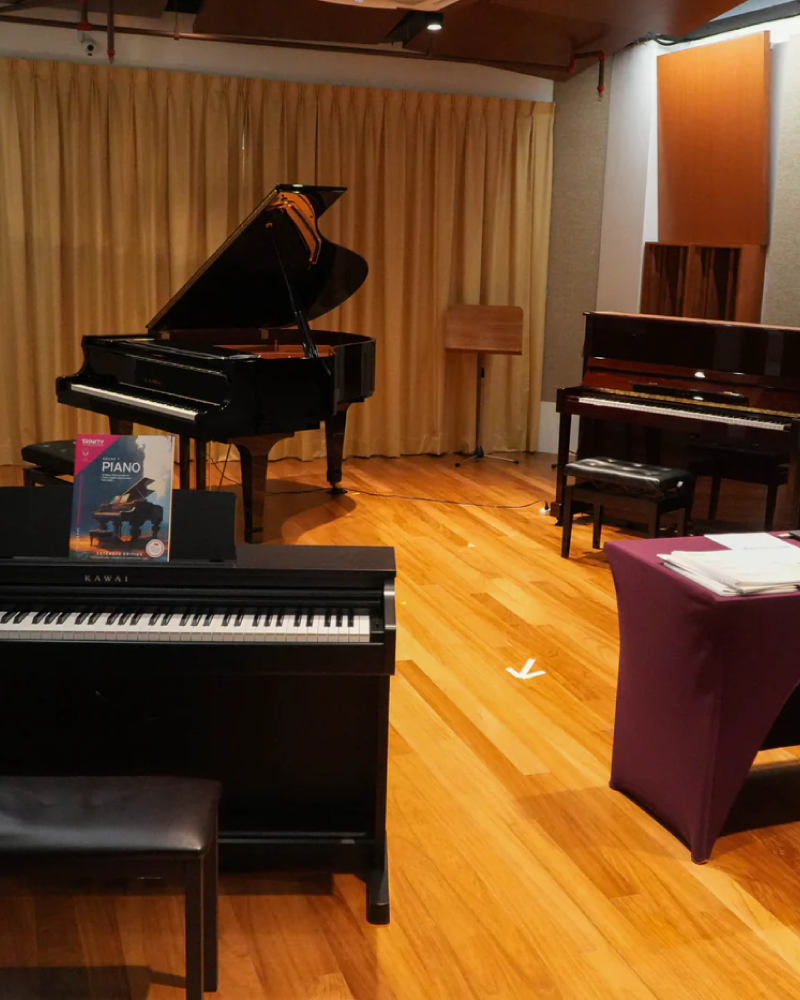
Music examinations are often an important milestone in a student’s learning journey. For many young pianists, exam day is not only about assessment, but also about building confidence, discipline, ...

Music has always had the power to transform a space - and during The Library Session, audiences were treated to an intimate musical experience led by Shanhui Yim, one of Malaysia’s rising musical t...


